
As an Amazon Associate I earn from qualifying purchases.
The quick choice: will this bundle change?
For home electronics, reusable cable ties vs zip ties is mostly a question of what happens the next time you add or remove a cable. Choose hook-and-loop straps when you expect to reopen the bundle. Standard disposable nylon zip ties can make sense for a settled arrangement if you accept replacing the tie when the bundle needs to change.
Neither choice earns a blanket claim of better durability or electrical safety. Start with the closure, the space around the cables, and the fit. This cable tie buying guide compares those decisions, with Nettbe's 60-piece, six-inch reusable set as one shopping example. It is a researched comparison; we have not tested that set.
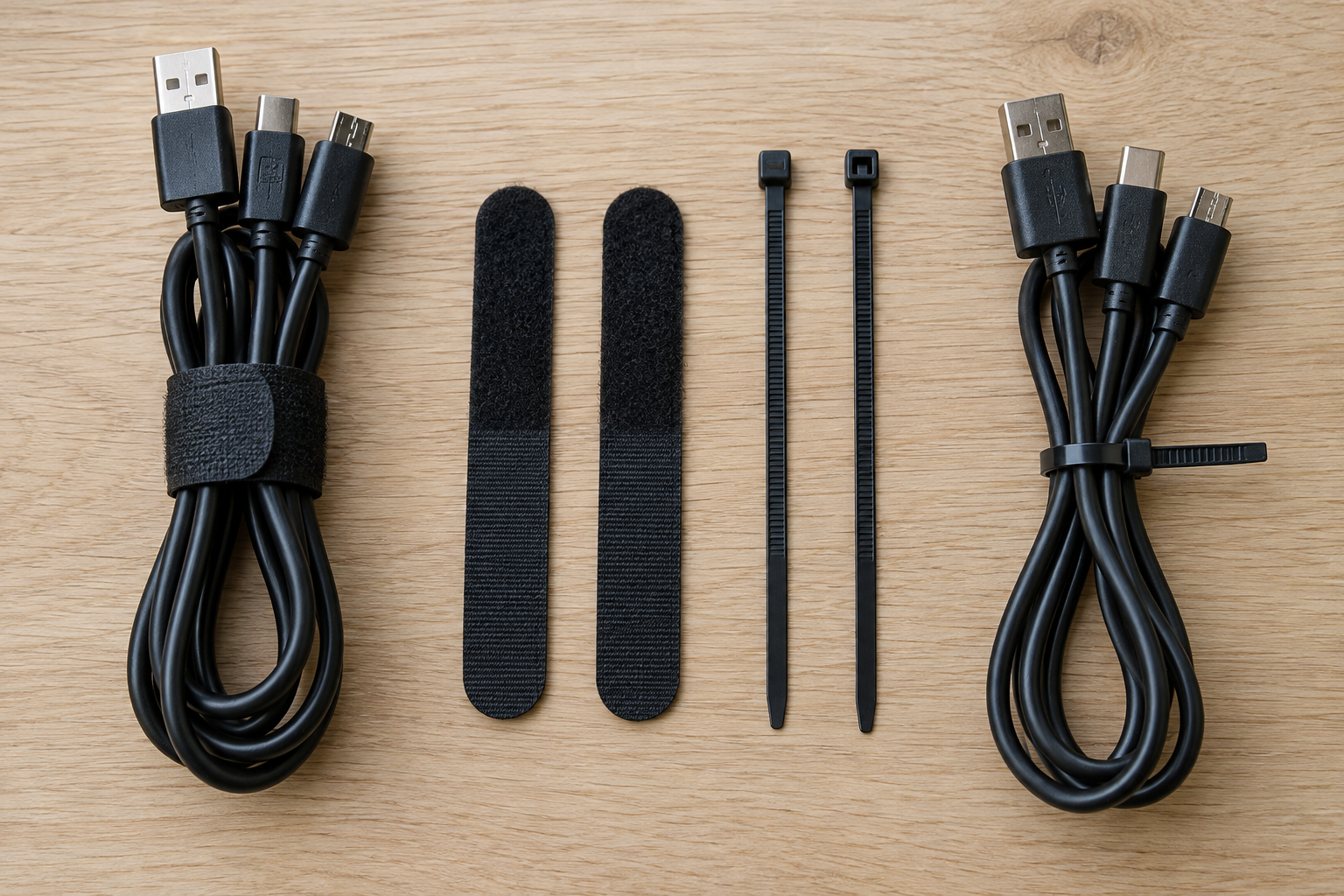
Compare what each closure lets you do
| Buying question | Hook-and-loop strap | Disposable zip tie |
|---|---|---|
| Can you reopen it? | Peel apart the overlap and refasten it. | A standard non-releasable closure is intended to stay locked; plan to cut off and replace the tie. |
| Can you loosen the bundle? | Reopen it and move the overlap. | Pulling the tail tightens the loop. Loosening is not its intended adjustment. |
| What determines fit? | Enough strap length to go around the bundle and leave fastening overlap. | The product's specified bundle-diameter range, plus room for the head and tail. |
| What happens when a cable changes? | The same strap can be reopened if its condition and remaining fit allow. | Budget for another tie each time you remove the old one. |
| What occupies space? | The fabric width and overlapping layers. | The narrow strap, locking head, and any remaining tail. |
VELCRO's ONE-WRAP instructions describe adjustable, reusable ties that wrap back onto themselves. That source explains the closure type; it does not establish how long Nettbe's straps last. HellermannTyton's cable-tie guide also distinguishes releasable designs. A plastic zip tie with a release lever belongs in a different comparison from a disposable one. Read the closure description rather than assuming every plastic tie is single-use.
Choose reusable straps when you expect to reconfigure
Think about a bundle of USB or other signal cables that occasionally loses one lead or gains another. A fabric strap lets you peel open the closure, change the group, and wrap it again. You can also adjust the loop without committing to the next ratchet tooth. That is the practical reason to consider reusable wire ties for electronics.
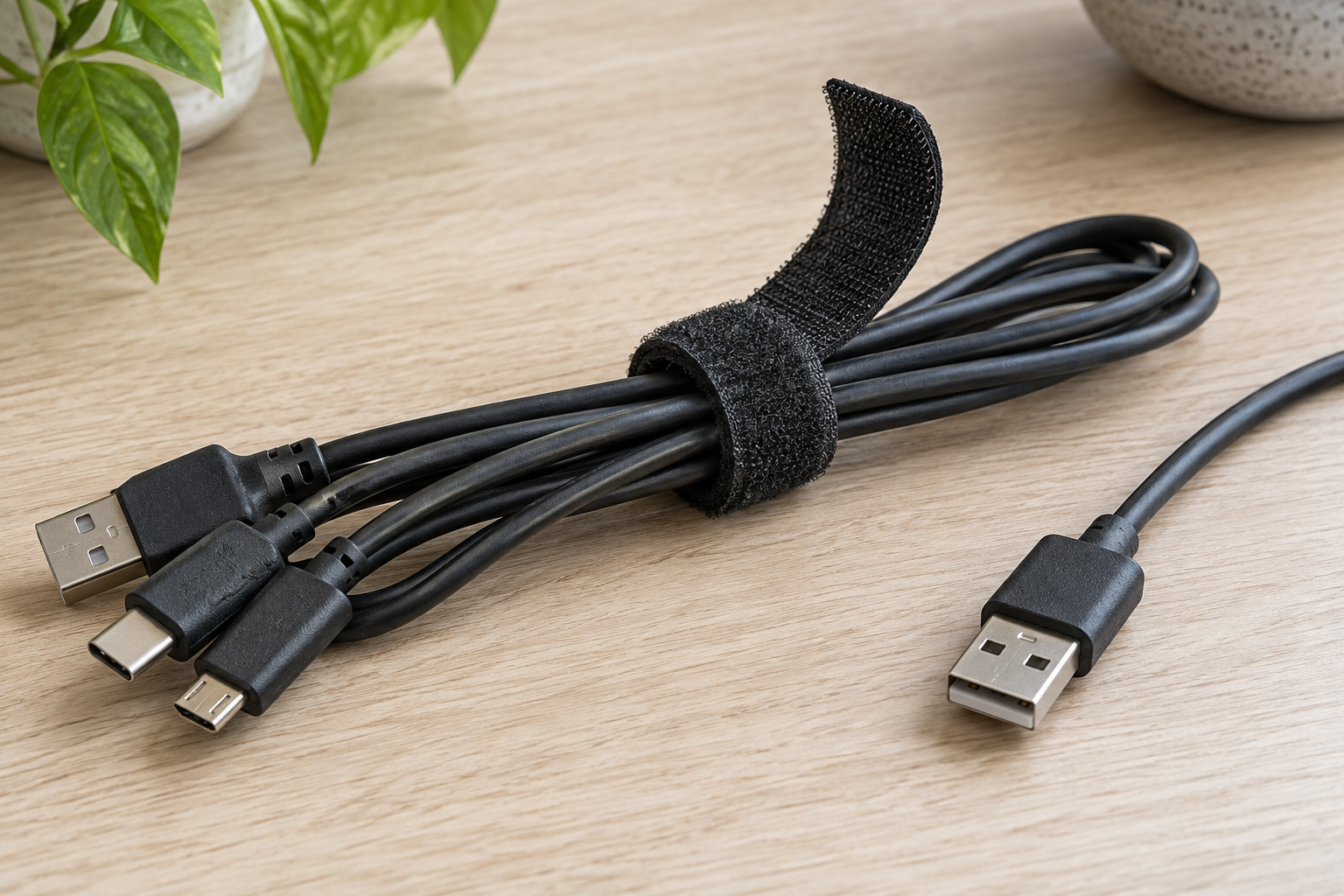
Keep groups small enough that the cable you change most often can be removed without opening every tie in the arrangement. This is a buying consideration too: several suitably sized straps may serve your setup better than one long strap around everything. A large pack is useful only if enough of its ties fit the groups you actually have.
There is no verified reopen-and-close cycle count for the Nettbe set in this guide. Reusability describes the closure's function, not unlimited life. Check the fastening surfaces and fit before reusing a strap; replace it if it no longer closes adequately.
Choose disposable zip ties for a settled arrangement
A standard nylon zip tie may be a reasonable choice when the group will stay together and replacing the fastener later is acceptable. Check the exact tie's dimensions and stated application limits. The word “zip tie” alone tells you neither its permitted load nor its temperature rating.
Allow for removal access before closing the tie. HellermannTyton's EVO cut removal-tool page describes cutting a plastic tie at its strap or head. The relevant buying point is that removal requires a way to reach the tie. Follow appropriate tool and equipment instructions; do not choose a closure that leaves you unable to access it without cutting near a cable jacket.
Pack price also needs context. Compare current cost per usable tie, then consider how often you will replace it. Reusable straps may avoid buying a fresh fastener for each change, but this guide does not establish a savings amount or a break-even point. If your existing ties already fit a settled bundle, a new pack may add little.
Six inches is strap length, not bundle diameter
A six-inch fabric strap must travel around the bundle and still overlap enough to fasten. Its full length is not usable as the circumference, and it certainly is not a six-inch bundle diameter. Round bundles, flat cable groups, strap thickness, and the closure shape all affect the final fit.
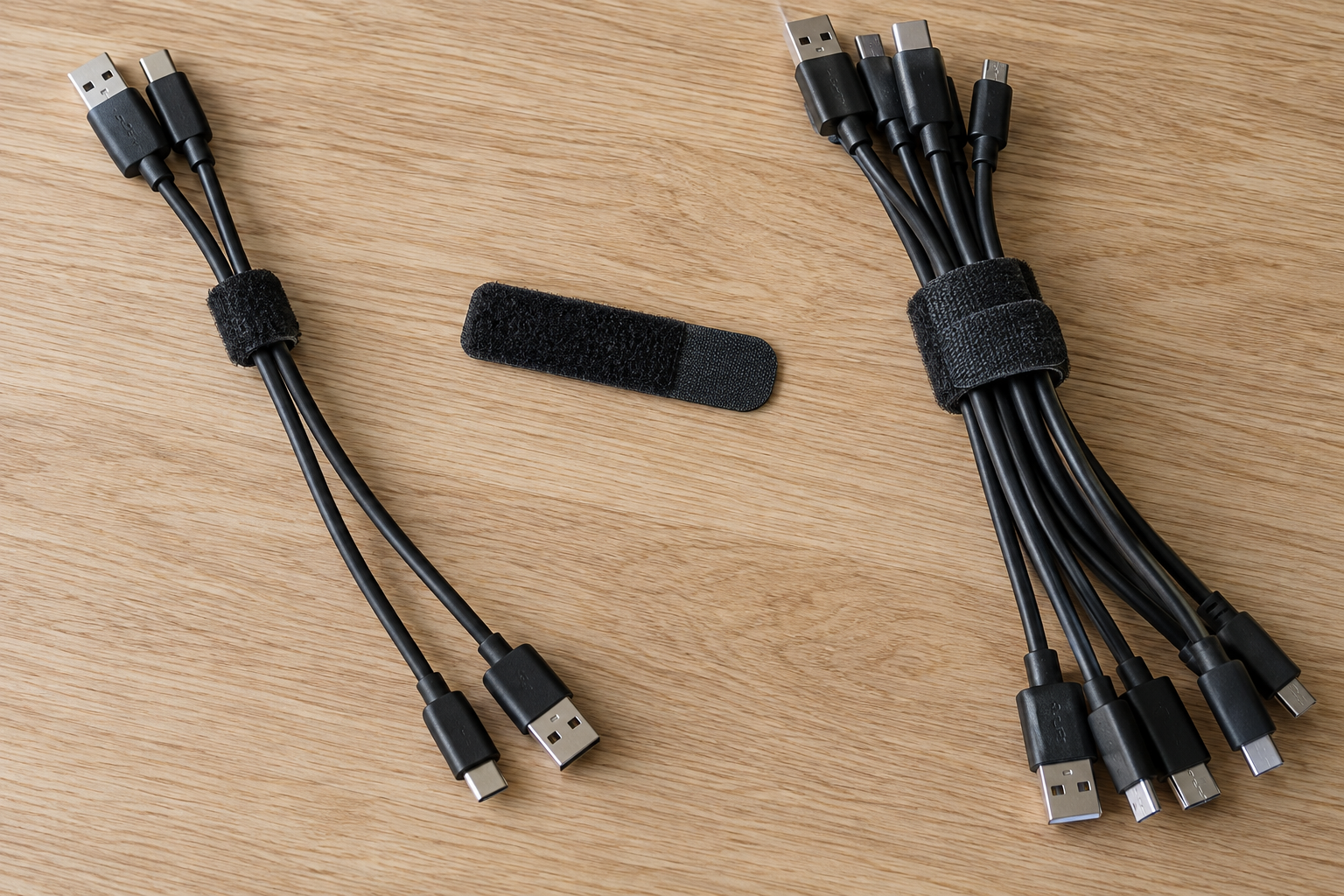
Before ordering, use a flexible tape or a piece of string to check the distance around the relaxed cable group where the tie will sit. Compare that measurement with the product's length and any published bundle-size or overlap guidance. Do not tighten the cables together simply to make a short strap reach. If the listing does not resolve fit, choose a size with clearer specifications rather than treating a pack count as proof of compatibility.
Width matters as well. A broad fabric strap needs a wider clear section of cable than a narrow nylon tie, while a zip tie's head needs its own clearance. Keep either closure away from connector housings and release tabs. Follow cable and equipment guidance for bends and routing; a tidy bundle does not demonstrate improved device performance.
The Nettbe 60-piece set: a specific option to check
Current retailer records identify Nettbe 60 PCS 6 Inches Reusable Cable Ties as black hook-and-loop cord straps under ASIN B081HH5X61. Traedeusa's product record lists Nettbe, 60 pieces, and six-inch length for that ASIN. The supplied Amazon URL contains an older “Reusable-Newlan” path name; the ASIN is the identifier used for this comparison.
Consider this set if six-inch straps suit several small, changing cable groups. Skip it if you need longer wraps, a different closure, or documented application ratings the listing does not establish. The 60-piece count is a quantity, not evidence of stronger fastening. Check the selected variant and current description before buying. Amazon's page was unavailable to the research fetch, so price, availability, ratings, and seller details are not asserted here.
Before you buy
- Choose the closure by how often you expect to reopen the bundle.
- Check strap length, width, overlap requirements, and any stated bundle-diameter range.
- Count the cable groups that need a tie rather than buying the largest pack automatically.
- Plan access to peel open a strap or remove a disposable tie.
- Check the exact product's instructions and ratings for your application.
For a home electronics collection that changes, hook-and-loop straps are the more convenient default because their closure can be reopened and adjusted. For a settled group, disposable zip ties remain an option when replacement and removal access are acceptable. Buy the size and closure that fit that job, and keep any strength or safety claim tied to the exact product's documented specifications.