
Disclosure: As an Amazon Associate I earn from qualifying purchases.
Give the entryway two small jobs
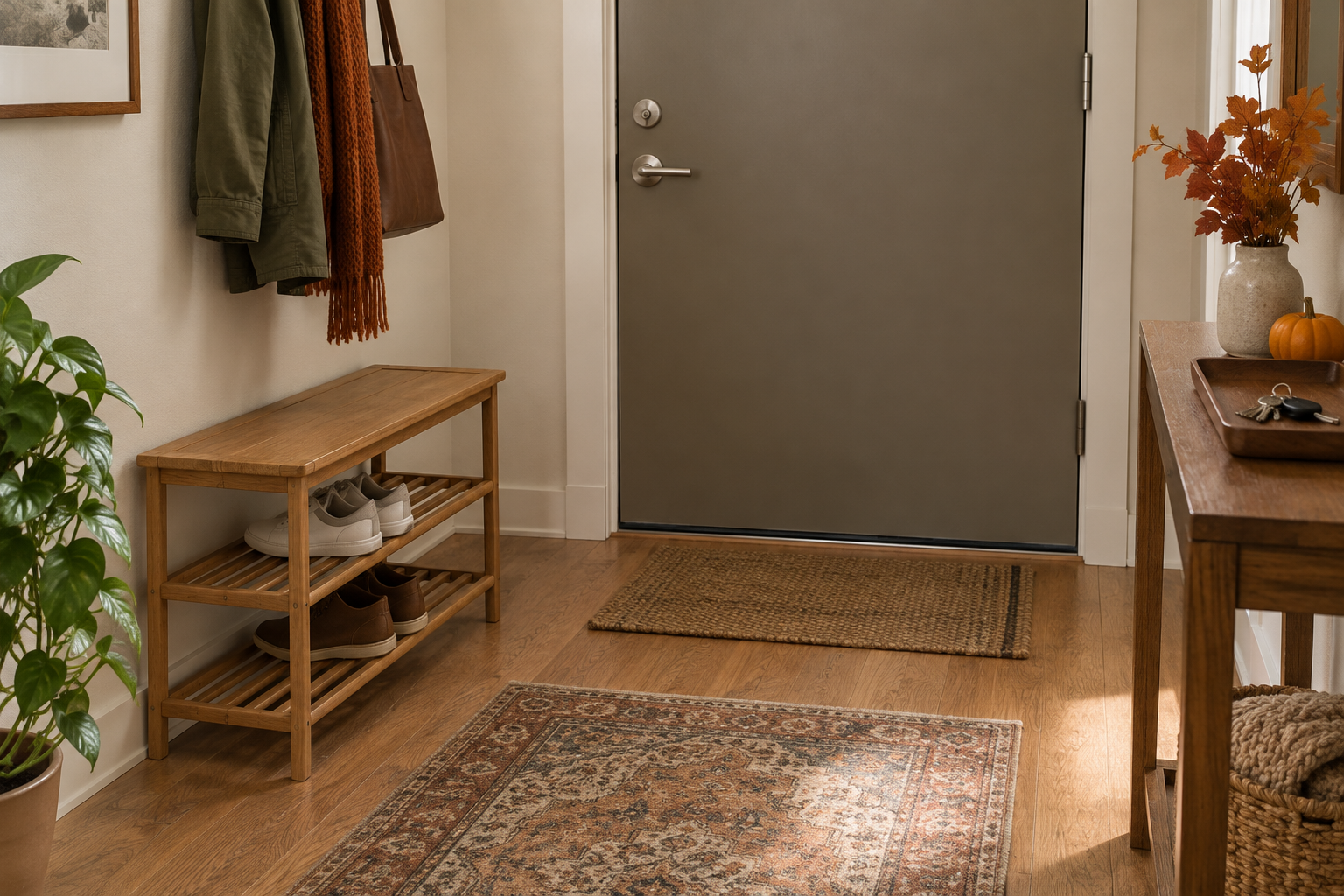
A small entryway works better when it has a limited job: hold the shoes you wear most often and the items you need when you leave. Start by removing spare footwear, unopened mail and items that belong elsewhere. Then choose a compact shoe zone and a separate landing place for keys. This keeps the area useful without asking it to store everything.
A freestanding shoe bench can suit someone who wants a place to sit while changing shoes. A small catch-all tray suits keys and other pocket items. They solve different problems, and you may already have one of them covered. If the bench would crowd the doorway, skip the bench rather than trying to make the hallway fit it.
Measure the door swing before the furniture
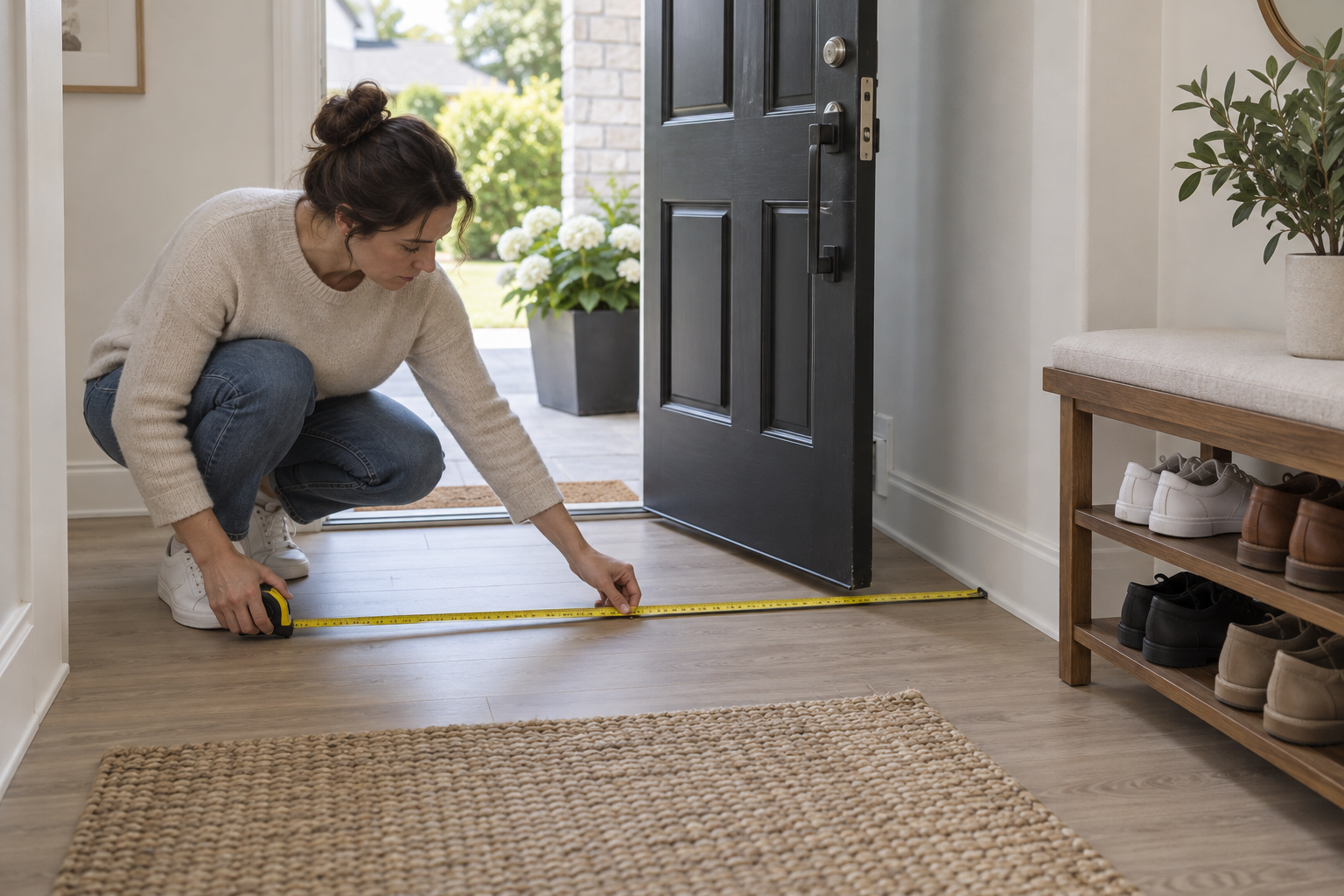
Measure the proposed bench’s width, depth and height against your room. Open the door through its normal range, including any nearby closet door, and check the path while carrying a shopping bag. Leave access to switches, vents and anything you need to reach routinely. Test the footprint with an empty cardboard box before ordering furniture.
Compare the measurement with the manufacturer’s current listing for the exact model. SONGMICS identifies its brown bamboo bench as ULBS04Z; confirm the model and instructions rather than relying on a similar-looking photo. Follow assembly and load directions before using a bench as a seat.
- Choose a position that keeps the entrance and walking route clear.
- Measure the floor footprint and door swing together.
- Check shelf spacing against the shoes you actually wear.
- Assemble according to instructions on a suitable level surface.
- Try the routine with your normal bag and footwear before filling every shelf.
Low shoe shelves may not accommodate taller boots. Keep boots somewhere that fits them instead of laying them across the seat or piling them in the walking path. When your footwear changes with the season, rotate pairs rather than increasing the pile.
Keep the tray small enough to stay useful
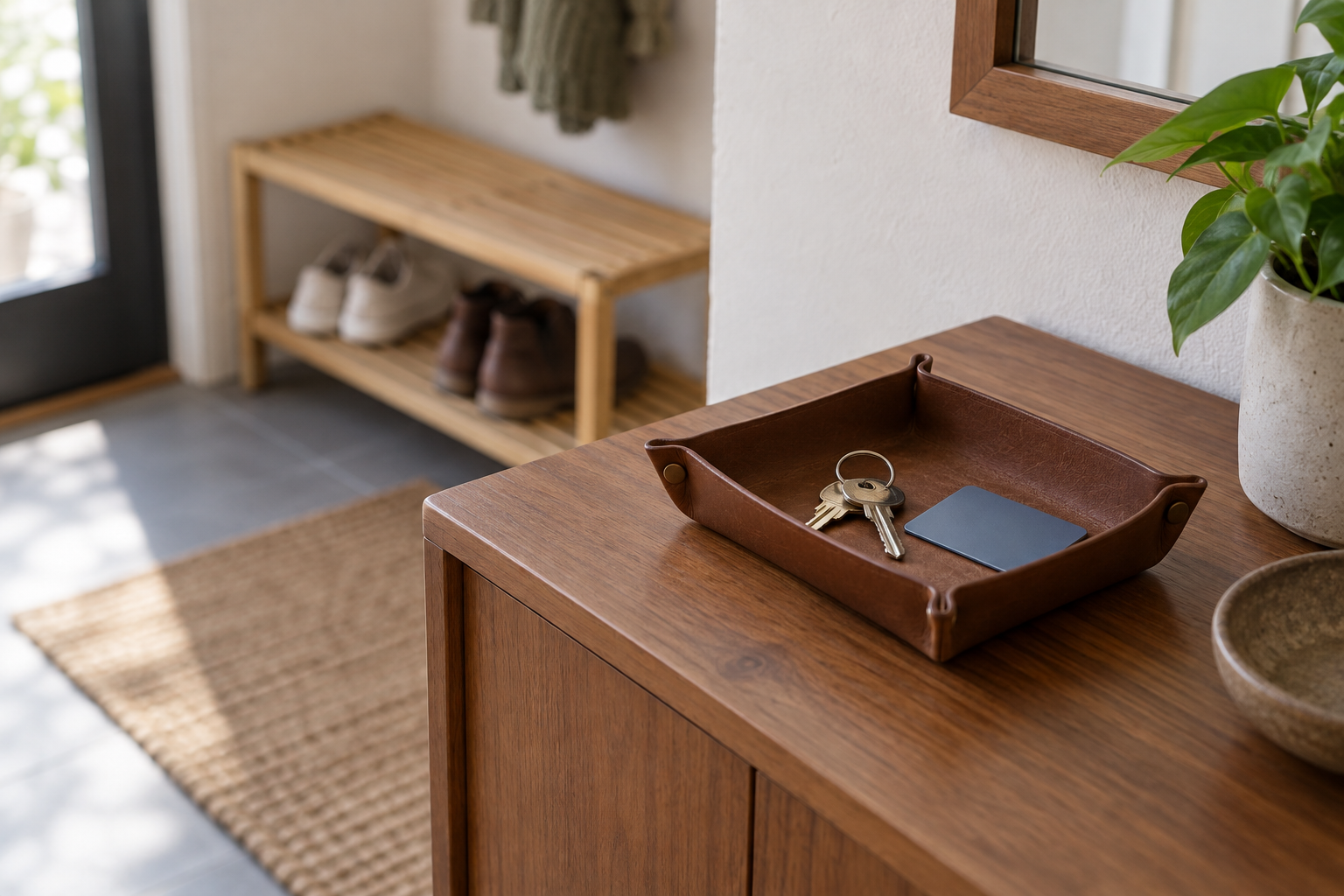
Put the tray on a stable surface you already have within easy reach when arriving home. Give it a short list of residents: perhaps keys, a transit card and one other daily carry item. If mail and receipts keep landing there, move those to their own place. A tray helps only while you can see and retrieve what is inside.
Keep wet umbrellas and damp items away from the keys tray. Follow the bench’s care guidance for moisture and cleaning rather than treating bamboo furniture as a drying rack. Avoid resting damp footwear where it will drip onto stored items or the floor.
Try a brief reset when you come home: shoes to their space, keys to the tray, bag to its usual location. Once a week, remove pairs you did not use and clear items that migrated into the tray. If the layout still causes congestion, reduce the amount stored before adding another organizer.
Tools to consider
Choose for your measurements and routine. Check the current listing and manufacturer instructions before buying; no hands-on testing or price comparison is claimed here.
SONGMICS Shoe Rack Bench, 3-Tier Bamboo, Brown ULBS04Z
Freestanding shoe storage and seating. Measure floor space, door clearance and shoe height before choosing this freestanding bamboo bench. Follow assembly and load instructions; a shoe shelf is not automatically suitable for tall boots.
View on AmazonValet Tray PU Leather Key Holder Bowl, Brown
Catch everyday keys and small carry items. A small PU-leather catch-all can give keys a consistent landing place. Check its footprint against the surface you already have, and keep wet items separate; it adds no shoe storage.
View on Amazon